How to mount the camera and crop so that the system counts correctly?
Video format requirements
We support a huge number of video formats and encodings and we are constantly expanding our capabilities.
- Files with extensions: avi, mp4, dav, flv, wmv, tc, h265
- H264/H265 encodings also with variable frame rate,
Attention! The
seek()function of video jump in AITracker GUI does not work properly for variable frame rate videos!Attention! We do not support interlaced videos where even/odd lines of the image are alternately saved. Wikipedia
The name of the files should include the start time of the recording (may also be the date). The name can also include the end time of the recording. We support many time and date formats and nomenclature - when a new format appears, we add it to the system.
Attention! The system defines the time on the recording only by the name and number of the frame! We don't have the option to read the clock image stored inside the video frame!
Camera requirements
- Min. image resolution is 640x480px (we recommend 1MPix (1280x720 HD) or more).
- The minimum frame rate is 10FPS. (15FPS or more recommended)
- Min suspension height of the camera 3m (recommended 4-5m, for large intersections even 6-7m)
Recommendations regarding the installation and quality of the camera have been grouped according to the services provided.
Cross-sections of roads - national roads, expressways, motorways
The cross-section of the road between 1 and 8 lanes counts correctly. The camera can be mounted both on the side of the road and centrally (e.g. in a green belt). We used to recommend 2 cameras for expressways and motorways, but in the current version they count correctly (provided that all lanes are visible).
Correct assembly for the following sections:
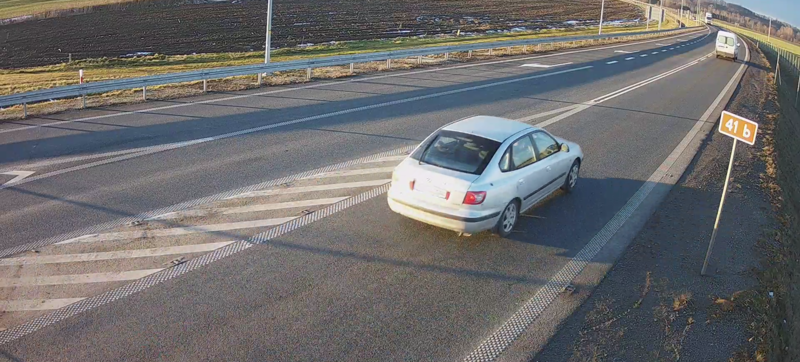
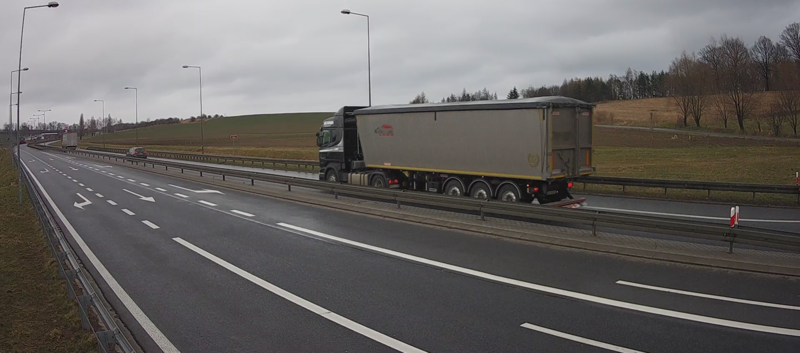
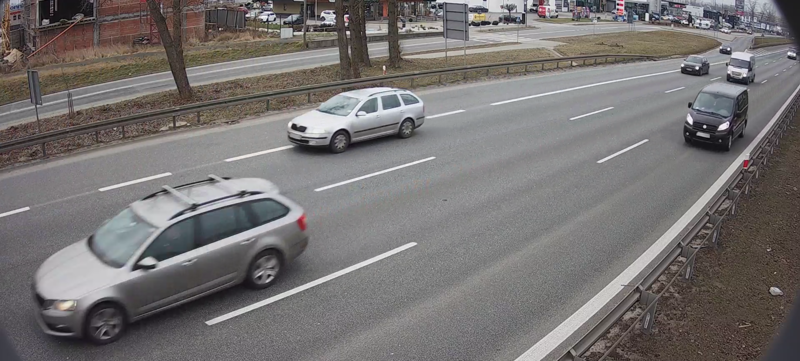
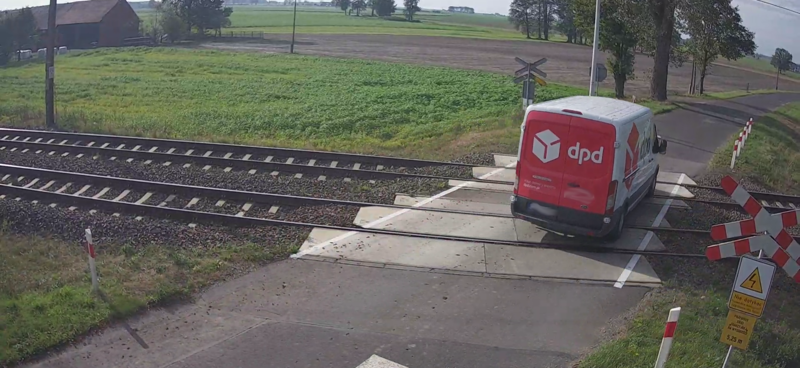
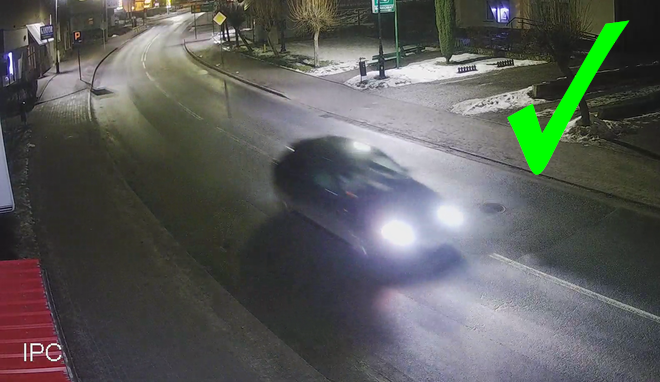
The silhouette of the vehicle must be visible at night, lights alone are not enough for AI.
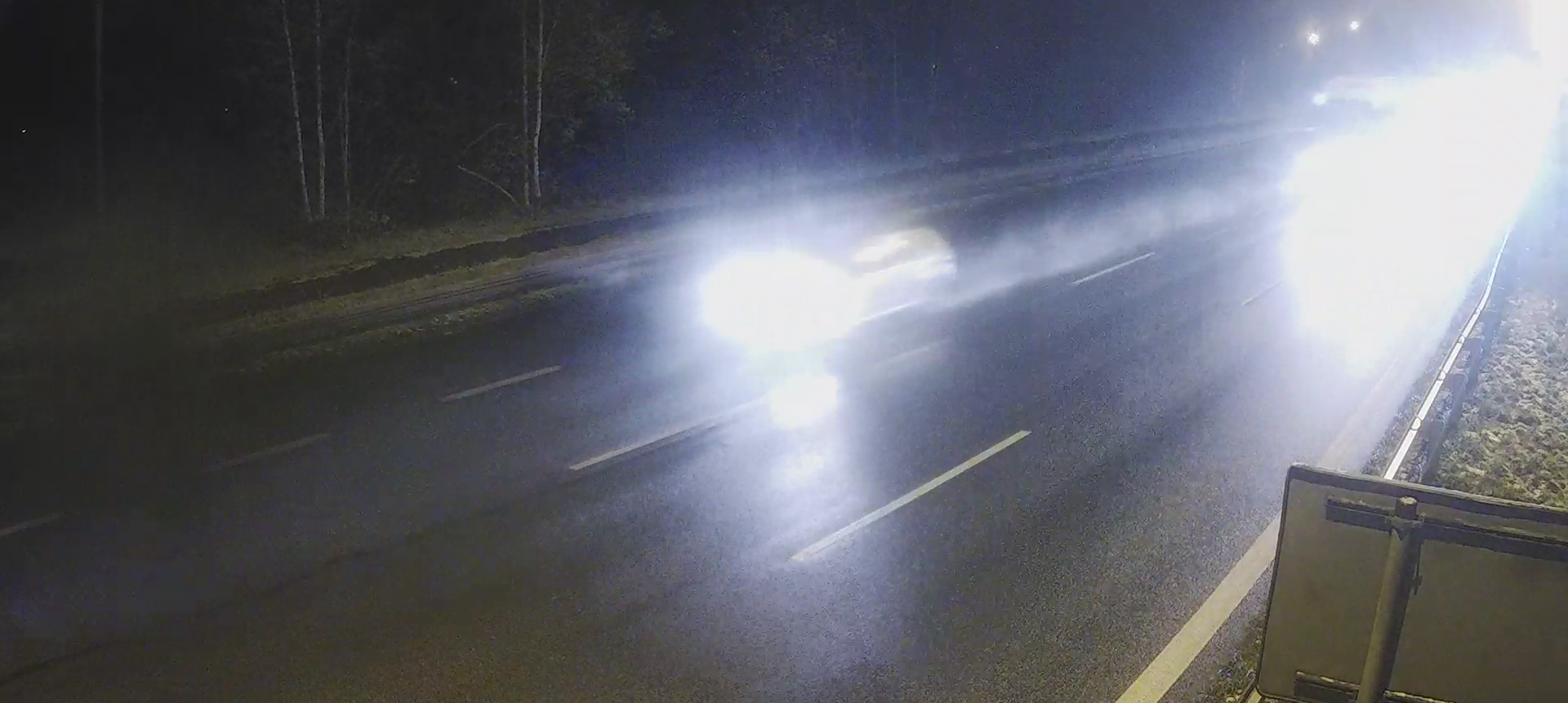
Rain/snow + night conditions are the most difficult conditions for vehicle recognition. It is still possible, but the error under these conditions may increase by 5%.
Incorrect mounting and conditions of the camera:
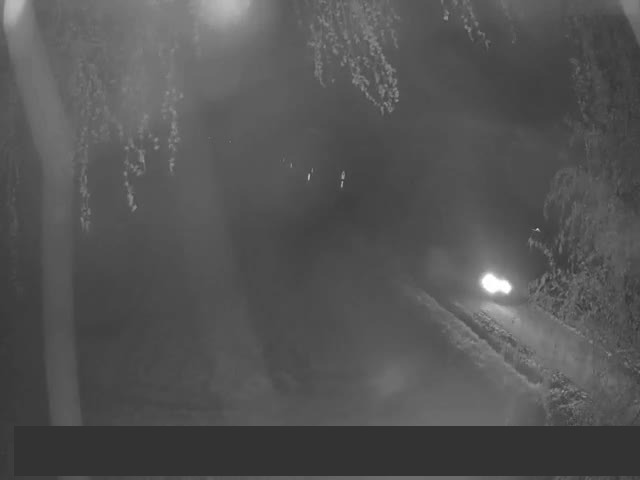
Vehicles in the above example are very small. In addition, only the lights are visible at night and the silhouette of the vehicle is missing. Unfortunately, the lack of a silhouette of the vehicle (just lights) is not enough for the object to be recognized as a vehicle by AI.
Intersections and roundabouts
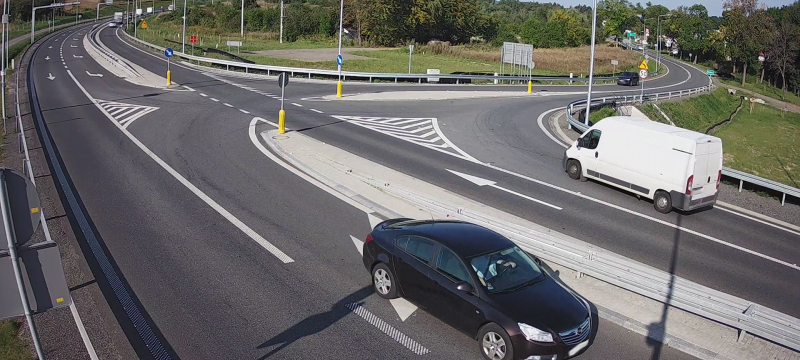
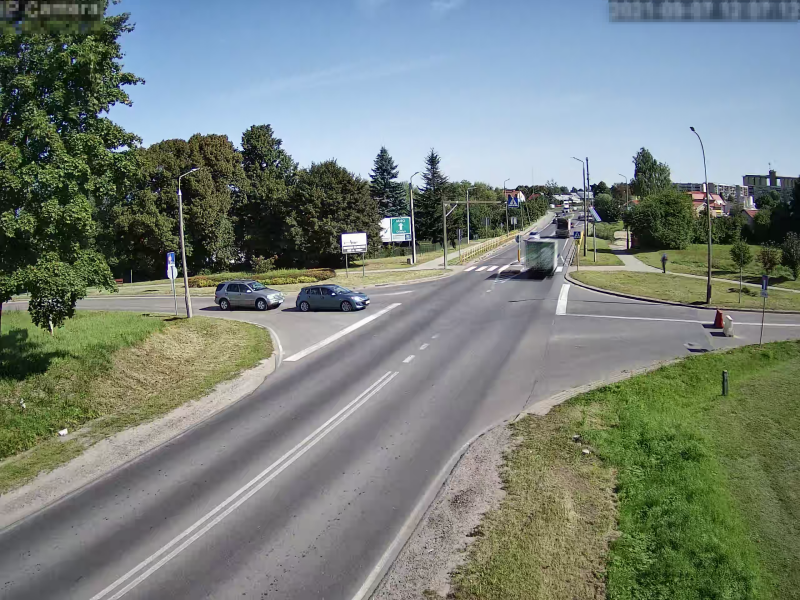
Intersections, 2 entrances with 2 lanes each and roundabouts count correctly. Due to the size of the intersection, it is recommended to mount the camera high (4m or 5m), close to the intersection (preferably right next to it). It is important that each entrance is equally well visible and for roundabouts it is important that the island in the middle does not have bushes/trees or other vegetation that will obscure vehicles
Valid examples:
Speed measurement
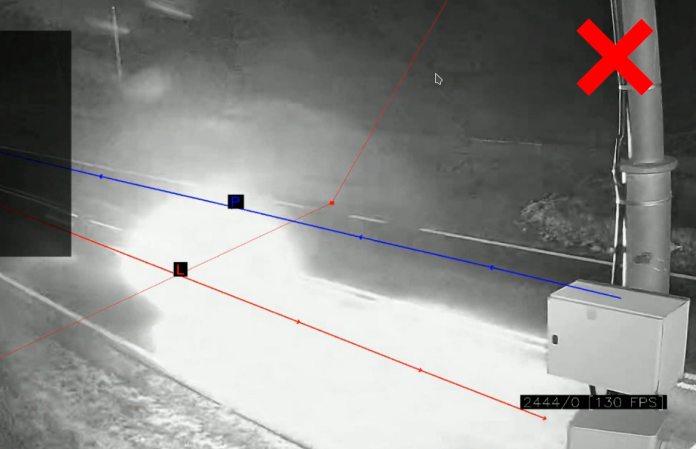
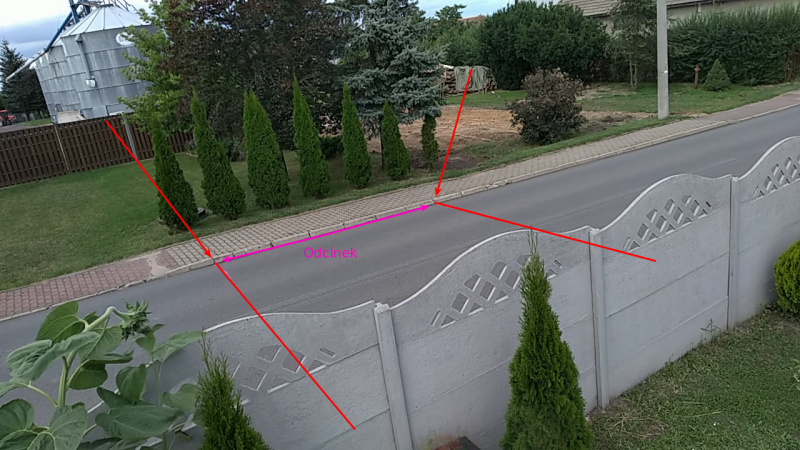
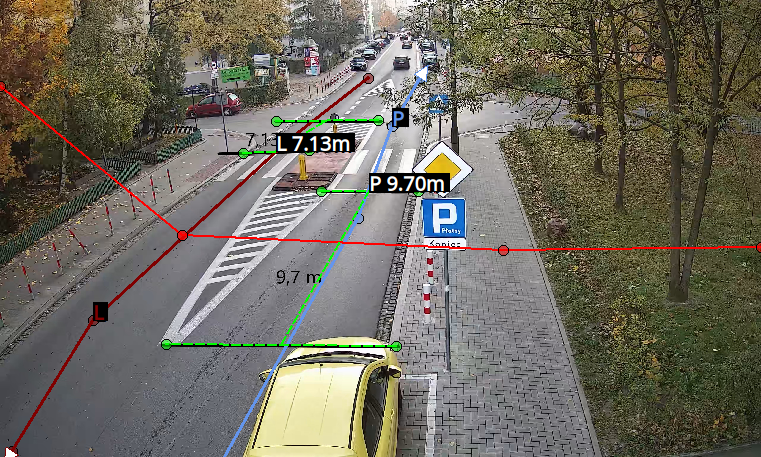
The speed measurement requirements are identical to those for sections plus an additional requirement that the measurement section should be as close to the center of the frame as possible. When the measuring section is too close to the edge of the frame, vehicles appearing or disappearing may be recognized too late (or similarly lost too early) after crossing the section. Then there will be no measurement and the speed will not be calculated. Also, pay attention to obstacles that could cause obscurations or errors.
Valid examples:
Pedestrian measurement
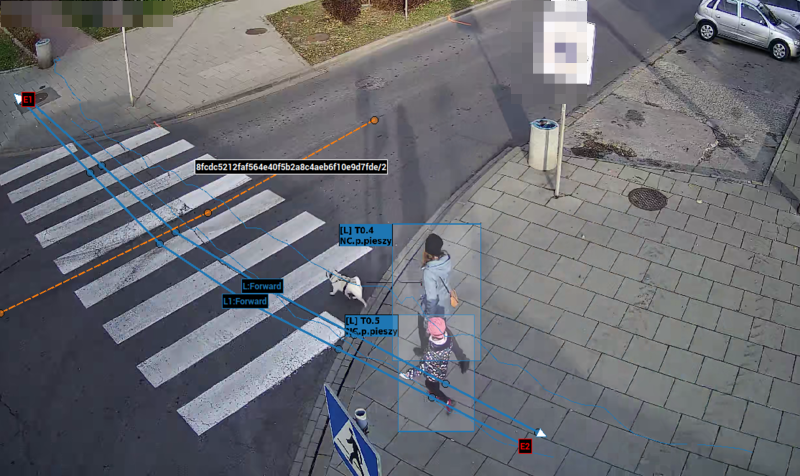
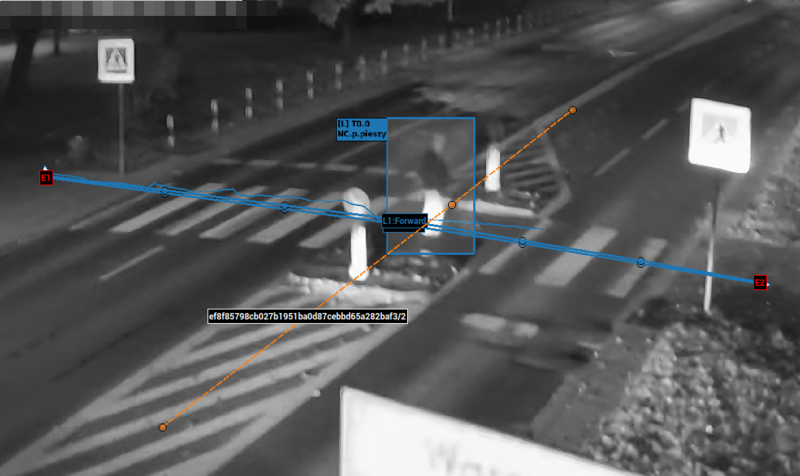
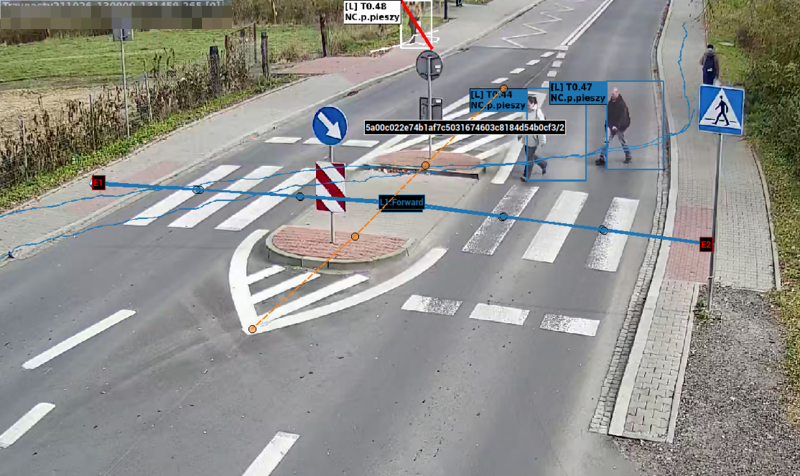
Humans are difficult objects to detect and track. Strong resemblance, they often mix or go behind obstacles. Therefore, we recommend measuring pedestrians only in a specific cross-section (e.g. cross-section of a pedestrian crossing or cross-section of the entrance to the building or cross-section of the access to the bus stop).
Valid examples:
ALPR
The requirements for ALPR are identical to those for sections plus the additional requirement that the license plate must be clearly visible in at least one place/zone of the frame. In practice, this means hanging the camera lower than for the cross-section and directing the camera more parallel to the road.
Valid examples:
Parking ALPR
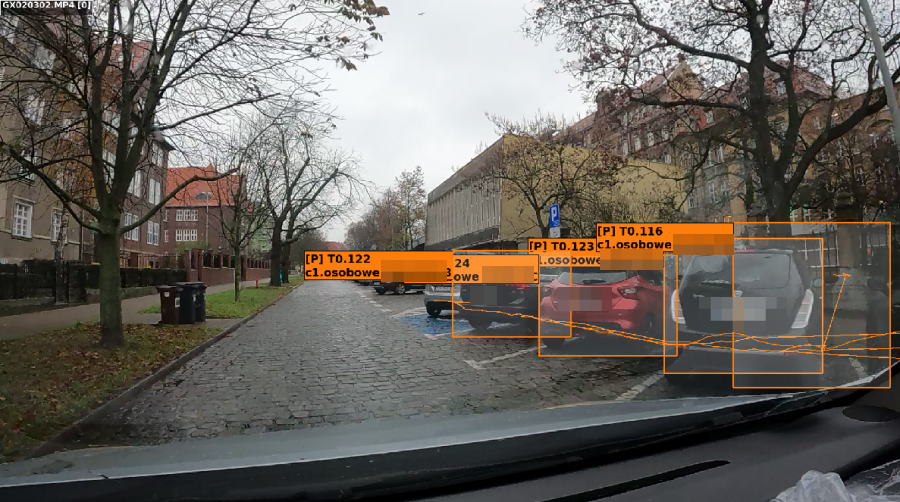
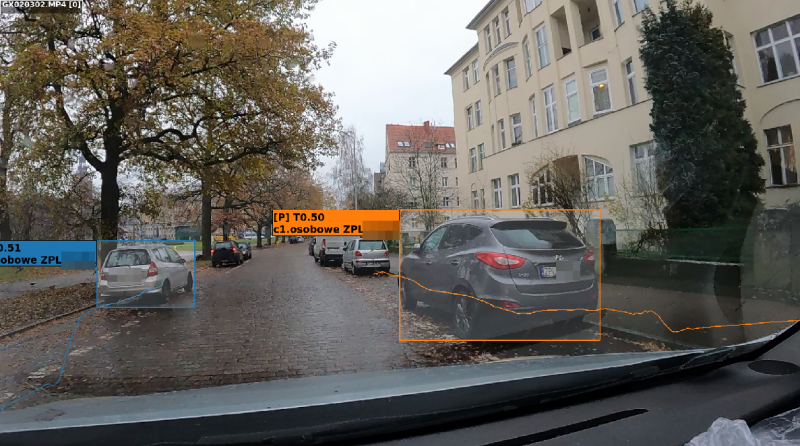
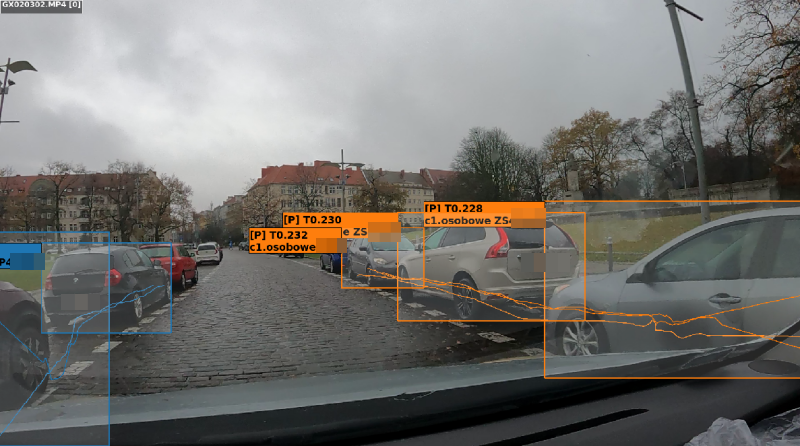
The parking ALPR measurement is a specific ALPR measurement where the camera is mounted inside a car that is moving around the parking zone. The requirements we define for the camera are:
- Installation right near the windshield and centrally on the board, or on the right when the driver will record each side of the road separately (the right side is the base, detour and return),
- The minimum number of frames per second is 50-60FPS (this is required if we want to capture densely parked parallel vehicles),
- The maximum speed of the vehicle is 30km/h,
Valid examples: